
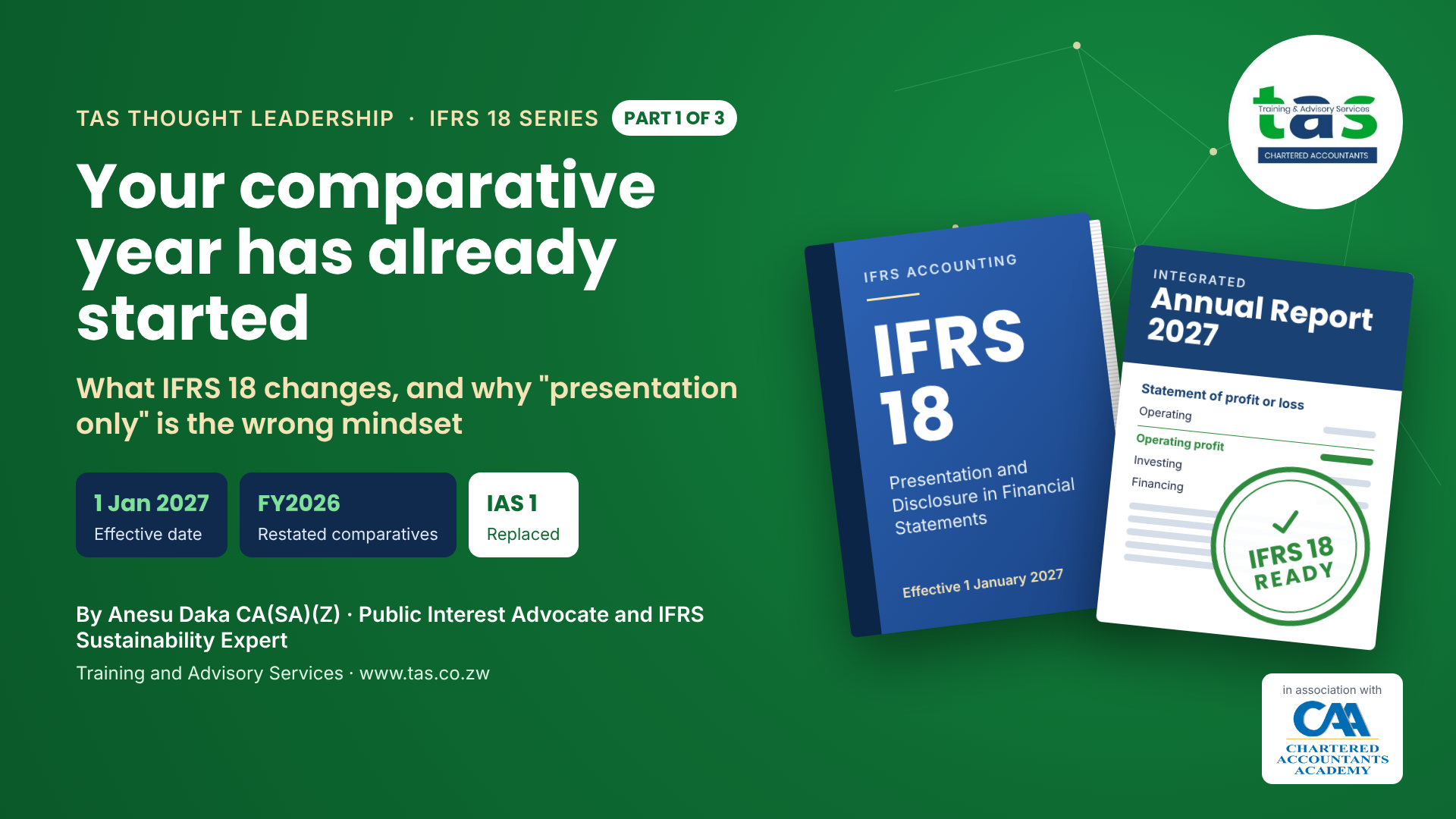
In a study of 100 companies, the International Accounting Standards Board (IASB) found that more than 60 reported an operating profit. They used at least nine different ways to calculate it. Investors comparing two companies’ “operating profit” were often comparing two different things.
From 1 January 2027, that ends. IFRS 18 Presentation and Disclosure in Financial Statements replaces IAS 1 for annual periods beginning on or after that date. The IASB’s Chair, Andreas Barckow, describes it as “the most significant change to companies’ presentation of financial performance”. Many finance teams have filed IFRS 18 under “presentation only”. That is an expensive assumption.
What IFRS 18 changes
IFRS 18 does not change how much a company earns. It changes how those earnings are structured, labelled and explained:
- Three new categories. Every item of income and expense is classified as operating, investing or financing, alongside income taxes and discontinued operations.
- Two new required subtotals. Operating profit, and profit before financing and income taxes, for most entities.
- Management-defined performance measures (MPMs). “Adjusted” profit measures used in public communication move into a single note in the audited financial statements, reconciled to an IFRS subtotal, with their tax and non-controlling interest effects.
- Sharper aggregation and disaggregation. Fewer unexplained “other” lines. Companies that present expenses by function also disclose specified expenses by nature, such as depreciation and employee benefits.
- A revised statement of cash flows. Operating profit becomes the starting point for the indirect method, and interest and dividends get fixed classifications for most entities.